16mm to Inches: Exact Conversion, Formula, Fraction Chart & Practical Uses
Many people overlook the significance of precise measurements in everyday tasks. Understanding the conversion from millimeters to inches is essential, especially when working with tools, crafts, or architecture.
This article will explore 16mm to Inches: Exact Conversion, Formula, fraction chart, and practical uses. By the end, you’ll be equipped with the knowledge to convert measurements confidently and understand when this skill is most valuable.
What is 16mm in Inches?
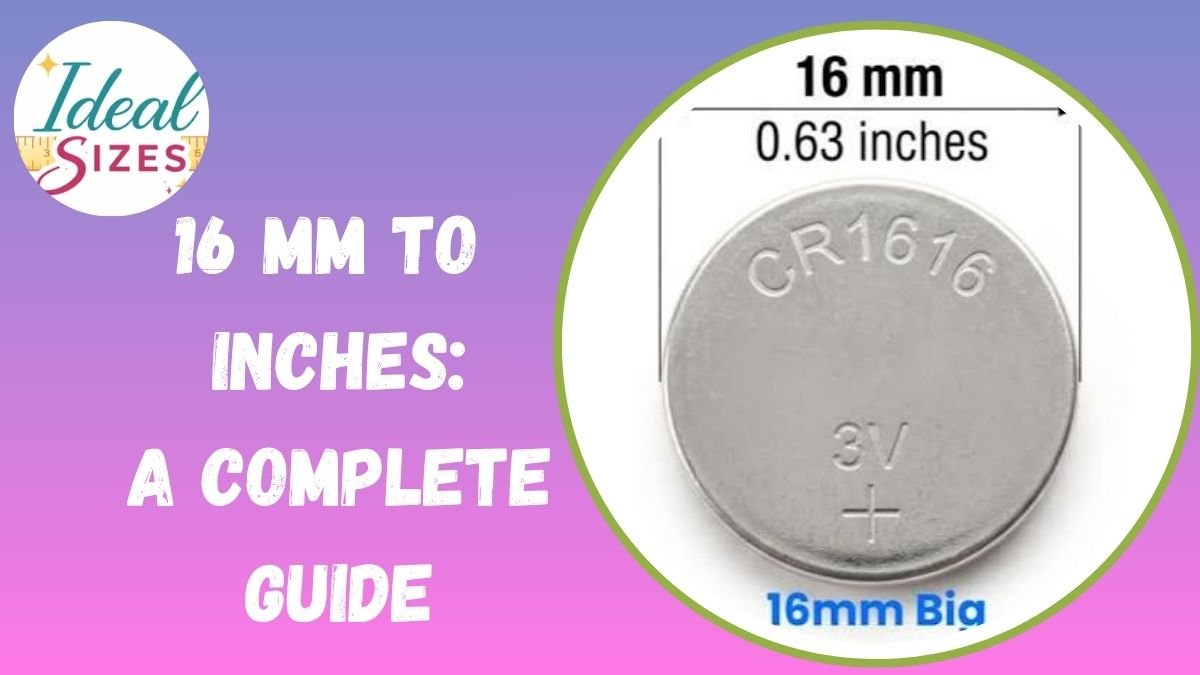
To understand what 16mm is in inches, we first need to know the conversion factor. One millimeter is approximately 0.03937 inches. So, when you convert 16mm to inches, you multiply 16 by 0.03937. This gives you about 0.6299 inches. In everyday terms, that’s a little over half an inch.
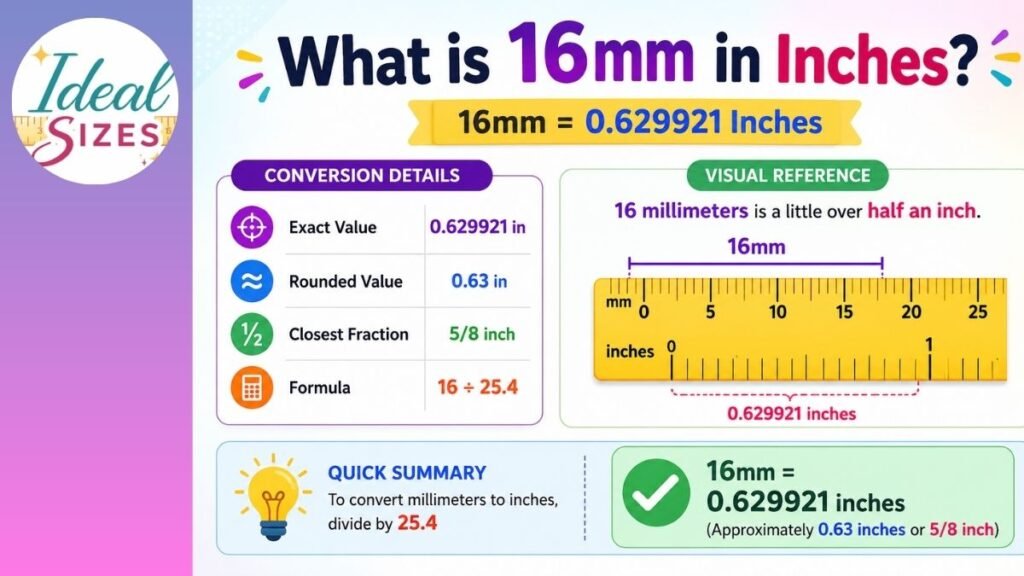
| Measurement | Value |
| Exact | 0.629921 inches |
| Rounded | 0.63 inches |
| Rounded (2 decimals) | 0.63 inches |
| Closest Fraction | 5/8 inch |
| Formula | 16 ÷ 25.4 |
Formula to Convert 16mm to Inches
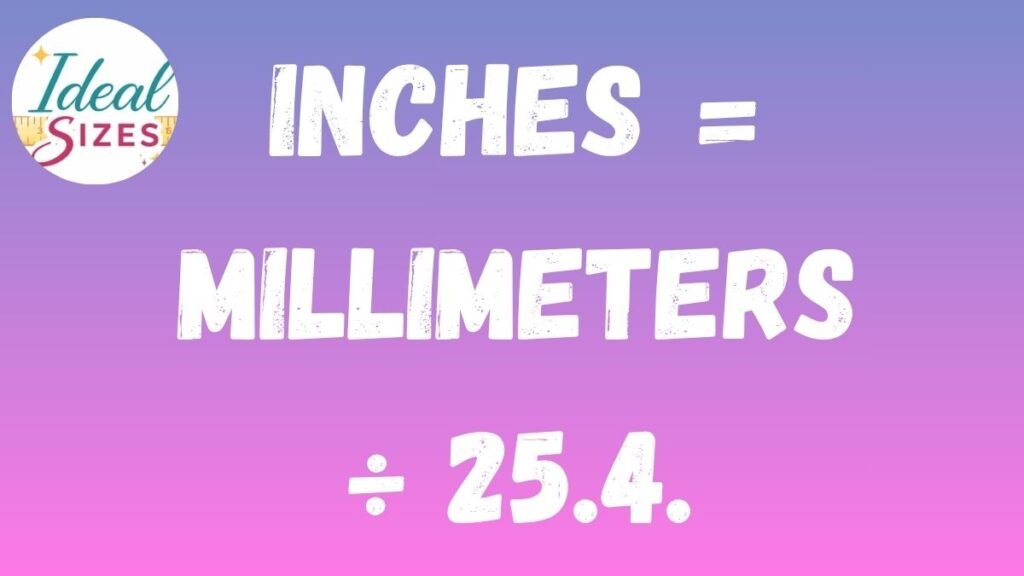
To convert millimeters to inches, we use a simple formula: Inches = Millimeters ÷ 25.4. For instance, if you’re working with 16 millimeters, you would divide 16 by 25.4, which gives you approximately 0.6299 inches. The number 25.4 represents the exact number of millimeters in one inch. This calculation is useful in various fields like machining, engineering, and construction.
How to Convert 16mm to Inches (Step-by-Step)
To convert 16mm to inches, start by knowing the basic conversion factor: 1 inch equals 25.4mm. To find out how many inches are in 16mm, you can use a simple calculation. Divide 16 by 25.4. This gives you approximately 0.6299 inches. Here is a complete process to convert 16 mm to inches.
- Step 1: Write the Formula
To convert millimeters to inches, use the formula: Inches = Millimeters ÷ 25.4. This formula is your key to making quick conversions.
- Step 2: Substitute the Value
Now, plug in the value you want to convert. For example, for 16mm, you’ll have: 16 ÷ 25.4.
- Step 3: Perform the Calculation
When you do the math, you find: 16 ÷ 25.4 = 0.629921. This gives you the exact size in inches.
- Step 4: Round the Result
For simplicity, round it off. So, 0.629921 can be rounded to ≈ 0.63 inches.
In conclusion, you’ve converted 16mm to approximately 0.63 inches. If you prefer fractions, it’s close to 5/8 inch (0.625″). This process helps you with various measurements, whether in crafting or engineering tasks!
16mm in Decimal and Fractional Inches
When discussing 16mm in both decimal and fractional inches, it’s essential to understand how these measurements convert. In decimal form, 16mm is approximately 0.62992 inches. For fractions, 16mm translates closely to 5/8 inch. So, why is 5/8 inch considered the nearest common fraction? The reason lies in its simplicity and widespread usage. 5/8 is a convenient fraction that many people recognize.
| Type | Value |
| Exact Decimal | 0.629921 |
| Rounded | 0.63 |
| Rounded (2 decimals) | 0.63 |
| Closest Fraction | 5/8 inch |
16mm to Inches Conversion Chart
When it comes to converting 16mm to inches, knowing the right figures can make all the difference. Using a conversion chart can be handy. For example, smaller measurements like screws or nails are often listed in millimeters, while home improvement supplies may be listed in inches. By keeping a 16mm to inches conversion chart on hand, you can save time and avoid mistakes. Whether you’re a hobbyist, a craftsman, or just someone tackling a home repair, having this knowledge at your fingertips simplifies your work and enhances your confidence.
| Millimeters | Inches |
| 8 | 0.315 |
| 9 | 0.354 |
| 10 | 0.394 |
| 11 | 0.433 |
| 12 | 0.472 |
| 13 | 0.512 |
| 14 | 0.551 |
| 15 | 0.591 |
| 16 | 0.630 |
| 18 | 0.709 |
| 20 | 0.787 |
| 25 | 0.984 |
| 30 | 1.181 |
Practical Uses of 16mm Measurements
Practical uses of 16mm measurements span various fields, from construction to crafting. Here are some of the most common uses of 16 millimeters measurements.
Automotive Repairs
In automotive repairs, 16mm sockets and spanners are essential for dealing with metric fasteners. These tools fit perfectly on engine mount and suspension bolts.
Construction
In construction, 16mm measurements come into play with structural bolts and anchor fasteners. These components are vital for steel framing connections that provide the strength needed for robust structures.
Plumbing
In plumbing, compression fittings and nuts often require a 16mm size. This measurement is perfect for pipe connection components, whether you’re dealing with copper, PVC, or steel. When conducting water supply system repairs, using the correct 16mm tools can prevent leaks and ensure a proper fit.
Engineering
In engineering, 16mm measurements are crucial for designing precision machine parts. These parts must fit together seamlessly to ensure functionality and efficiency. Small variations can lead to failures, so using standardized measurements like 16mm helps maintain high quality and consistency.
Manufacturing
In manufacturing, CNC-machined components often rely on 16mm standards. These measurements allow for intricate designs that can be reproduced accurately across multiple products. For metal fabrication projects, using 16mm as a reference helps streamline the cutting and assembly processes.
DIY Projects
When tackling DIY projects, 16mm measurements come in handy for various tasks. They are often used when assembling furniture or building shelves. You can find 16mm screws and dowels that ensure a snug fit.
Home Improvement Tasks
In home improvement, 16mm is a common size for many fixtures. It’s perfect for mounting hardware like brackets or hooks. When fitting pipes or conduits, using 16mm measurements helps ensure precision.
Jewelry & Crafts
For crafting, 16mm measurements offer versatility in jewelry-making. Large decorative beads fit nicely into designs, while craft spacers and connectors can enhance your pieces.
Everyday Things That Are About 16mm
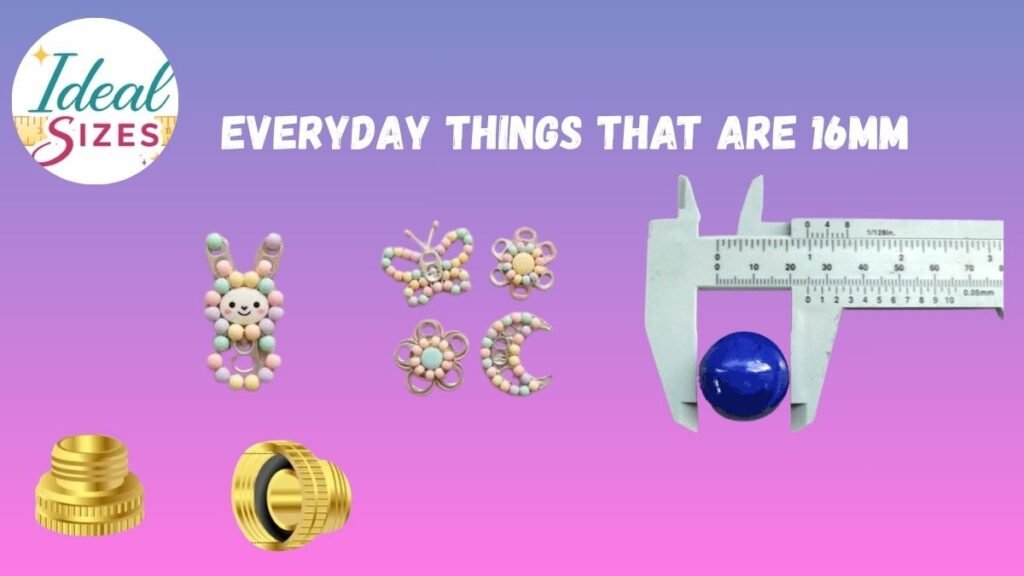
Many everyday items and activities revolve around the size of 16mm. Here are some of the most common things that measure 16 mm in size.
Width of a Large Marble
A large marble typically measures around 16 mm in diameter. Marbles are small, round objects used in games, decoration, and sometimes art. They are often made from glass or clay. Playing with marbles can enhance hand-eye coordination.
Large Shirt Button
A large shirt button generally has a diameter of 16 mm. Buttons fasten clothes and also add a decorative touch. In fashion, the size and style of a shirt button can greatly influence the overall look of an outfit. A well-chosen large button can enhance the design of a shirt.
Thick Marker Cap
Thick marker caps typically measure around 16 mm in diameter. Marker caps serve important functions, sealing the ink and preventing it from drying out. A well-fitting cap can extend the life of your markers.
Decorative Craft Bead
Decorative craft beads are commonly available in 16 mm sizes. They are widely used in jewelry making, keychains, bracelets, necklaces, and other DIY craft projects. These beads come in various colors, shapes, and materials, making them a popular choice for creative designs.
Garden Hose Connector (Diameter)
Garden hose connectors are crucial components in gardening. They link hoses to faucets or other hoses seamlessly. They range from 12 to 25 mm in diameter. These connectors ensure a secure and leak-free connection. They come in various materials, like plastic or brass.
Lip Balm Cap
A lip balm cap, usually around 16mm in diameter, is a small but vital part of personal care products. It protects the balm from contamination and keeps it fresh for longer. The cap is designed to fit snugly, preventing spills and ensuring the balm doesn’t dry out.
Bicycle Valve Cap
A bicycle valve cap is a tiny component, typically measuring around 16 mm in diameter. Its primary purpose is to protect the valve stem from dirt and debris. It also prevents moisture from entering.
Dice
Dice measuring 16 mm are the perfect size for board games and tabletop role-playing games. These cubes provide a fun element of chance and make games more engaging and interactive. They are easy to handle and roll.
16mm Compared to Common Inch Fractions
When it comes to measuring, 16mm can sometimes be confusing, especially when compared to common inch fractions. To break it down, 16mm is roughly 0.63 inches. This means it sits between 5/8 inch (0.625 inches) and 3/4 inch (0.75 inches).
| Fraction | Decimal | Comparison |
| 9/16 | 0.5625 | Smaller |
| 19/32 | 0.5938 | Slightly smaller |
| 5/8 | 0.6250 | Closest |
| 21/32 | 0.6563 | Slightly larger |
| 11/16 | 0.6875 | Larger |
Common Mistakes When Converting mm to Inches
Many people stumble when converting millimeters to inches due to simple mistakes. These are as follows.
- Dividing Incorrectly: One common mistake when converting mm to inches is dividing incorrectly. It’s easy to forget the conversion factor of 25.4. Remember, to convert millimeters to inches, you should actually divide by 25.4. If you divide by 2.54 instead, you’ll end up with an incorrect answer.
- Mixing Centimeters with Millimeters: People often mix up centimeters and millimeters. Since 1 centimeter equals 10 millimeters, it’s crucial to keep these units clear. If you think in centimeters while measuring in millimeters, you’ll miscalculate by a factor of ten.
- Early Rounding: Early rounding can also lead to inaccuracies. Many people round off their results too soon in the conversion process. Even rounding just a small decimal can have a big impact.
Why Accurate Measurement Conversions Matter
Accurate measurement conversions are crucial, especially when switching between millimeters (mm) and inches. A small error can lead to significant issues in projects, whether you’re building furniture, designing clothes, or crafting intricate models. For instance, if you mistakenly convert 50 mm to inches as 2 inches instead of the correct 1.97 inches, your final product may not fit as intended. This can result in wasted materials or costly repairs.
Related Metric to Inch Conversions
- 8mm to Inches: 8 mm is approximately 0.315 inches. A common size in photography and film, it’s often used for small fasteners.
- 10mm to Inches: 10 mm equals about 0.3937 inches. This size is widely used in jewelry and watches.
- 12mm to Inches: 12 mm is approximately 0.472 inches. This size is popular in woodworking, especially for dowels and screws.
- 13mm to Inches: 13 mm is about 0.511 inches. It often appears in metric bolt specifications and other hardware applications.
- 14mm to Inches: 14 mm is approximately 0.551 inches. It’s frequently used in automotive parts, like spark plugs and nuts.
- 15mm to Inches: 15 mm is roughly 0.591 inches. This measurement is handy in plumbing and piping systems.
- 16mm to Inches: 16 mm converts to approximately 0.630 inches. It’s a standard size in film production.
- 18mm to Inches: 18 mm equals about 0.709 inches. This size often appears in furniture design and home décor.
- 20mm to Inches: 20 mm is roughly 0.787 inches. It’s frequently used in lenses for cameras and telescopes.
- 25mm to Inches: 25 mm converts to approximately 0.984 inches. This size is vital in engineering, especially for precision instruments.
Conclusion
Understanding the conversion of 16mm to inches is straightforward and useful. The exact conversion gives you about 0.62992 inches, while the rounded value of 0.63 makes it easier for everyday tasks. You can also express this length as 5/8 of an inch, which simplifies many calculations. With the conversion formula at your fingertips, you’ll be ready for various applications in crafts, construction, and more. Don’t forget to use our chart to make conversions quick and easy in the future!
FAQs
What is 16mm in Inches Exactly?
16mm is exactly 0.629921 inches because one inch equals 25.4 millimeters. This precise measurement is useful in various fields, such as photography and engineering, where accurate conversions are important.
How to Convert 16mm to Inches?
To convert 16mm to inches, you can use a simple formula. Divide the number of millimeters by 25.4. This is because there are 25.4 millimeters in one inch. For example, to convert 16mm, calculate: 16 ÷ 25.4. This gives a result of about 0.629921 inches. If you round this number, it becomes approximately 0.63 inches.
What is 16mm in Centimeters?
To convert 16 millimeters into cm, you can use a simple formula. Since there are 10 millimeters in one centimeter, you divide the number of millimeters by 10. So, 16 mm divided by 10 equals 1.6 cm. This means that 16 millimeters is equal to 1.6 centimeters.
What is the Closest Fractional Inch to 16mm?
The closest fractional inch to 16mm is 5/8 inch. This fraction is equal to 0.625 inch. While it is slightly smaller than 16mm, it is often used in various tools and hardware. In metric measurements, 16mm is approximately 0.63 inch. So, 5/8 inch (or 0.625 inch) is the nearest decimal equivalent.
How many Inches is 16 mm rounded?
To convert 16 mm to inches, you can use a simple conversion factor. One inch is equal to 25.4 mm. To find the inches, you divide the millimeters by 25.4. So, 16 mm divided by 25.4 equals approximately 0.6299 inches. When rounded to two decimal places, 16 mm is about 0.63 inches.