15mm to Inches: Exact Conversion, Formula, Fraction Chart & Real-Life Examples
Did you know that 15 millimeters is not just a random measurement, but an exact conversion that can make a big difference in your everyday tasks? Understanding how to convert 15mm to inches is essential for various projects, from crafting to cooking.
In this article, we will explore the exact 15mm to inches conversion, the formula to use, and a handy fraction chart. We’ll also share real-life examples to make it all clear and practical for you. By the end, you’ll have everything you need to make precise measurements with confidence.
What is 15mm in Inches?
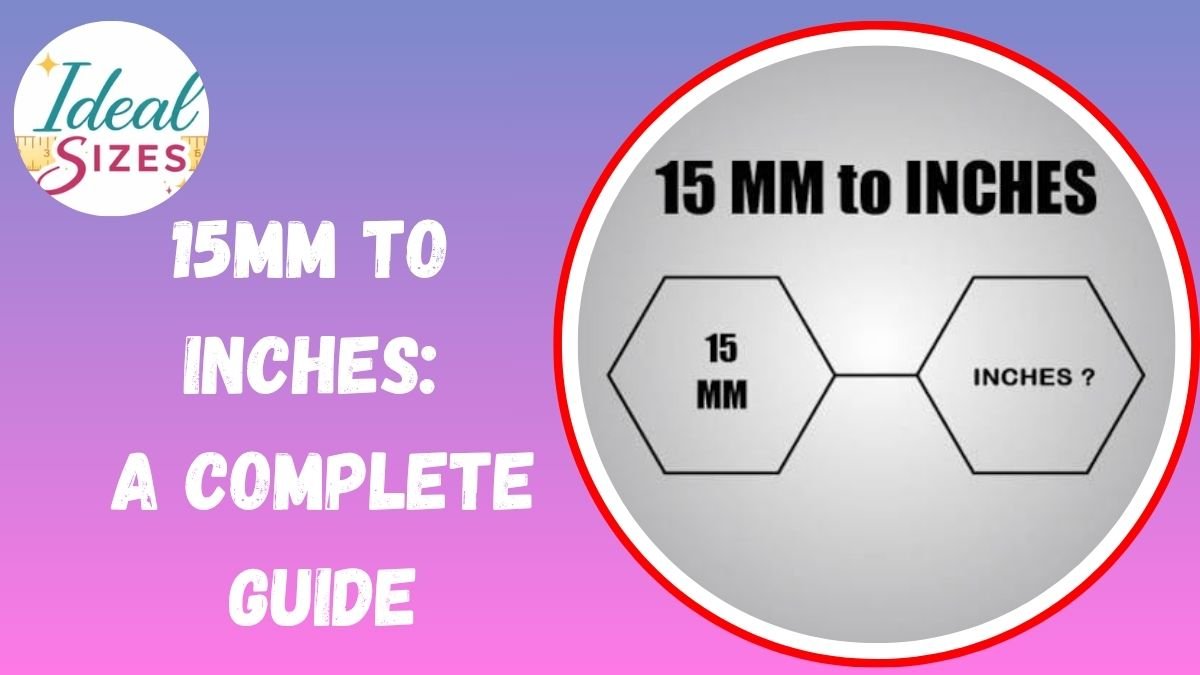
The exact value of 15 mm in inches is 0.590551 inches. You can round it to 0.591 inches. For everyday use, rounding to two decimal places gives you 0.59 inches. For a fraction, the closest common equivalent is 19/32 of an inch. This fraction equals 0.59375 inches.
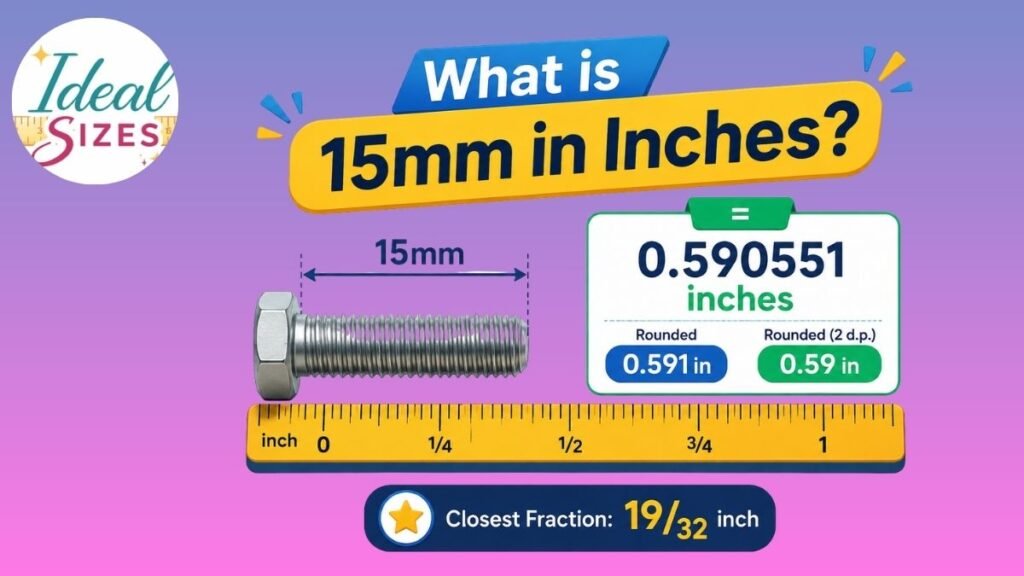
| Measurement | Value |
| Exact Inches | 0.590551 |
| Rounded | 0.591 |
| Rounded (2 decimals) | 0.59 |
| Closest Fraction | 19/32 inch |
| Formula | 15 ÷ 25.4 |
Understanding Millimeters and Inches
A millimeter is a tiny unit of measurement in the metric system, equal to one-thousandth of a meter. It’s commonly used for precise measurements, such as in medicine or engineering. For example, when measuring the thickness of a credit card, millimeters provide the accuracy needed for manufacturing.
An inch is part of the imperial system, with one inch equaling 2.54 centimeters. This system is widely used in countries like the United States for everyday measurements, such as height or furniture dimensions. The metric and imperial systems serve different needs, with the metric system being more straightforward in calculations thanks to its base-10 structure.
Both systems are still in use today due to tradition and practicality. Many industries stick with inches for familiar products, while scientific fields benefit from the accuracy of millimeters.
15mm to Inches Formula
When converting millimeters to inches, the formula is inches = millimeters ÷ 25.4. The reason for using 25.4 is history. This number represents the exact length of one inch in millimeters. The metric system was officially defined in the late 18th century. Over time, scientists and engineers agreed on this precise measurement for clarity and consistency.
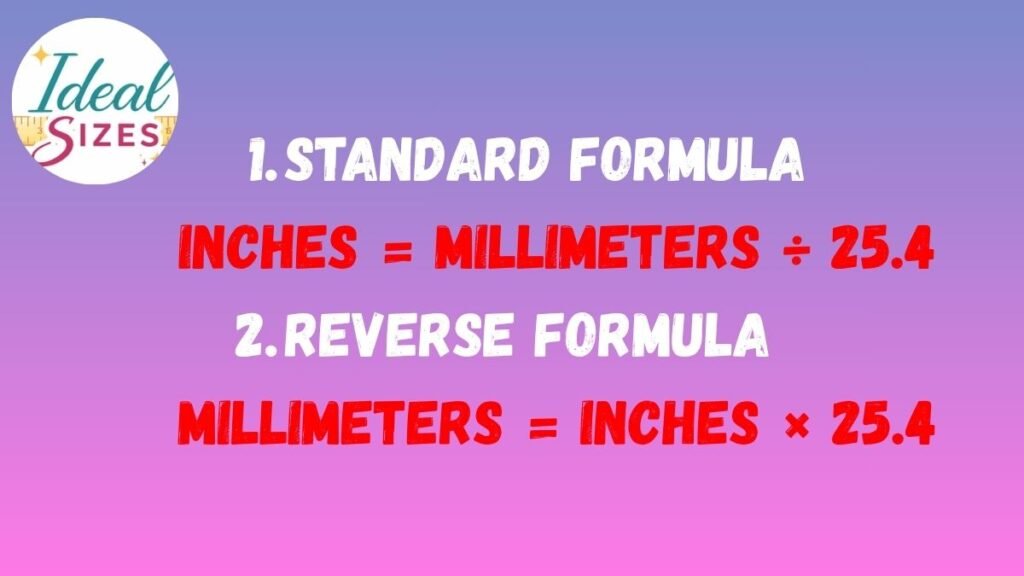
If you want to convert inches to millimeters, multiply the inches by 25.4.
How to Convert 15mm to Inches (Step-by-Step)
To convert 15mm to inches, follow these simple steps.
First, you’ll want to remember the formula: 1 inch equals 25.4 millimeters. This is your starting point.
Next, insert the value. For our case, divide 15 by 25.4. This gives you 15 ÷ 25.4. When you do the calculation, you’ll find that it equals approximately 0.590551.
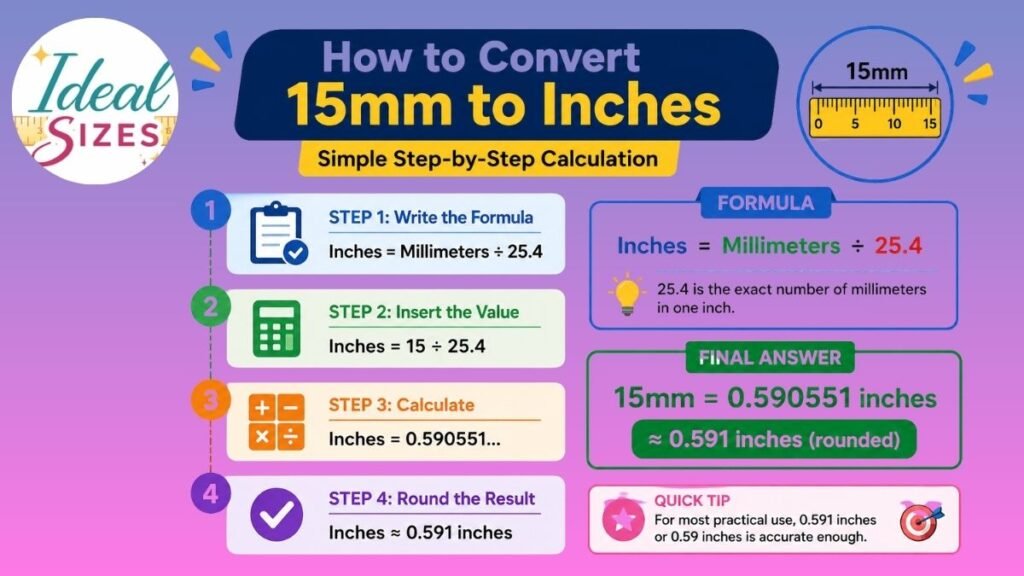
Finally, round off your answer for ease of use. You can round 0.590551 to about 0.591 inches. So, 15 mm is approximately equal to 0.591 inches. This method can help you convert measurements effortlessly in the future.
15mm in Decimal and Fractional Inches
15mm is often used in various applications, from woodworking to engineering. To convert 15mm into decimal inches, divide 15 by 25.4 (since 1 inch equals 25.4 mm). This calculation results in approximately 0.591 inches. Knowing this decimal is useful for various tasks, from crafting to construction.
In fractional inches, 15mm is roughly equivalent to 19/32 of an inch. This gives you a good visual reference and helps when working with standard measuring tools that often use fractions instead of decimals.
| Type | Value |
| Exact Decimal | 0.590551 |
| Rounded | 0.591 |
| Rounded (2 decimals) | 0.59 |
| Closest Fraction | 19/32 inch |
Is 15mm Equal to 19/32 Inch?
When you compare 15mm to 19/32 inch, you’ll find they are very close but not the same. To break it down, 19/32 inch converts to 0.59375 inches, while 15mm is approximately 0.590551 inches. It is a tiny difference of about 0.0032 inches.
15mm to Inches Conversion Chart
A 15mm to inches conversion chart is helpful for various projects, especially in crafts, DIY tasks, and construction. Whether you’re measuring fabric for a sewing project or need to convert dimensions for building furniture, having this chart simplifies your work. It quickly translates measurements and ensures accuracy.
| Millimeters | Inches |
| 5 | 0.197 |
| 8 | 0.315 |
| 9 | 0.354 |
| 10 | 0.394 |
| 11 | 0.433 |
| 12 | 0.472 |
| 13 | 0.512 |
| 14 | 0.551 |
| 15 | 0.591 |
| 16 | 0.630 |
| 18 | 0.709 |
| 20 | 0.787 |
| 25 | 0.984 |
| 30 | 1.181 |
Where is 15 mm used? (Real-Life Applications)
15 millimeters is a common measurement that is used in our daily lives. Here are some real-life applications of 15mm.
Construction and Architecture
In construction, 15mm is a popular size for pipes and fittings. It’s commonly used for water supply lines in homes. This size strikes a balance between volume and pressure. Builders often choose 15mm pipes because they fit well in tight spaces.
Automotive Applications
In automotive settings, 15mm is frequently found in tools and hardware. Wrenches and sockets of this size are essential for various vehicle maintenance tasks. Mechanics rely on 15mm tools to access tight engine compartments. This size is essential in keeping cars running smoothly and safely.
Plumbing
In plumbing, 15mm fittings are common for compression joints and water pipes. This size helps create watertight seals and prevents leaks in valve connections. Whether installing new plumbing or fixing old leaks, having the right 15mm components is essential for a successful job.
Engineering
15mm is also important in precision measurements for engineering. It directly impacts mechanical design by defining clear specifications.
Woodworking
In woodworking, 15mm router bits are popular. They allow for clean cuts and smooth finishes. Furniture hardware often utilizes this measurement.
Jewelry Making
In jewelry making, 15mm beads and components can elevate designs. They are perfect for bracelets and decorative pieces. Crafting with these sizes allows artisans to explore new styles while maintaining a cohesive look.
Everyday Objects That Are 15mm
Fifteen millimeters might seem like a small measurement, but it’s common in our everyday lives. Here are some of the most common things that are about 15mm.
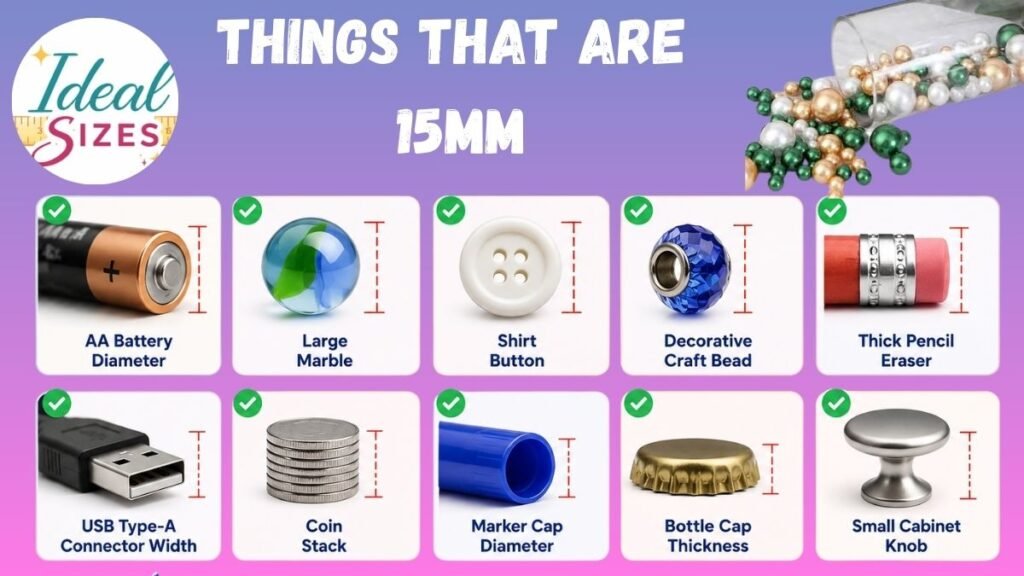
AA Battery Diameter
An AA battery is a common power source, widely used in household gadgets. Its standard diameter is about 15 mm. This size fits various devices such as remote controls and digital cameras.
Large Marble
A large marble typically measures around 15 mm in diameter, though sizes can vary. These decorative spheres are often made of glass. They serve as decorative pieces in crafts or home decor.
Shirt Button
The diameter of a standard shirt button is usually around 15 mm. Buttons are crucial for fastening shirts, jackets, and other clothing items. They add style to an outfit. With various materials such as plastic, metal, or wood, buttons can be both practical and fashionable.
USB Type-A Connector Width
The USB Type-A connector measures about 15 mm in width. It serves as the standard interface for connecting devices, such as keyboards, mice, and flash drives, to computers. Its design ensures a secure fit. It allows for reliable data transfer and charging.
Marker Cap Diameter
The diameter of a typical marker cap is around 15 mm. This design protects the marker’s nib from drying out and keeps it ready for the next use. A well-fitted cap also prevents ink spills.
Wooden Dowel Diameter
A wooden dowel with a diameter of 15mm is a common tool for structural and decorative purposes. Generally, these dowels are used to join two pieces of wood together. They provide strength and stability. They can also be utilized for craft projects, shelving, or as curtain rods.
15mm Compared to Common Inch Fractions
Comparing 15mm to common inch fractions is useful for understanding small conversions. Here is a 15mm fractions comparison chart.
| Fraction | Decimal | Comparison |
| 9/16 | 0.5625 | Smaller |
| 19/32 | 0.59375 | Closest |
| 5/8 | 0.6250 | Slightly larger |
| 21/32 | 0.6563 | Larger |
Common Mistakes When Converting 15 Millimeters to Inches
The following are the most common mistakes when converting 15 mm to inches.
Dividing by 2.54 Instead of 25.4: One common mistake in converting millimeters to inches is dividing by 2.54 instead of 25.4. Remember, 1 inch equals 25.4 millimeters, so to convert 15 millimeters into inches, divide by 25.4. Using the wrong figure can lead to inaccuracies in the final answer.
Mixing Centimeters and Millimeters: Mixing centimeters and millimeters can affect your calculations.
Guessing Instead of Calculating: The temptation to guess can lead to mistakes. Many assume they can estimate rather than perform the conversion. Rounding off too early or using mental math without solid calculations can lead you astray.
Multiplying Instead of Dividing: When converting 15 millimeters to inches, you should divide by 25.4, not multiply. This can lead to inflated measurements and potentially costly mistakes in projects or tasks.
Related Millimeter to Inch Conversions
8mm to Inches: 8 mm is approximately 0.31 inches. This small measurement is common in various applications, from camera lenses to jewelry.
10mm to Inches: 10mm converts to about 0.39 inches. This measurement is frequently used in construction, especially for thicknesses of tiles and boards.
12mm to Inches: 12mm equals approximately 0.47 inches. This size is often found in plumbing fixtures and furniture dimensions.
13mm to Inches: 13mm is around 0.51 inches. It’s a handy size for various automotive and electronic components.
14mm to Inches: 14mm translates to about 0.55 inches. This dimension is common in woodworking and metalworking.
16mm to Inches: For 16mm, divide 16 by 25.4, which equals about 0.63 inches. This size often appears in photography.
18mm to Inches: 18mm to inches is approximately 0.71 inches. This size can be essential in woodworking and crafting.
20mm to Inches: Twenty millimeters converts to approximately 0.79 inches. This size is commonly found in jewelry making and design.
Conclusion
Converting 15mm to inches gives you an exact value of 0.59055 inches, which can be rounded to 0.59 inches for practical uses. If you prefer fractional values, it is approximately 19/32 inches. Remember the formula: inches = millimeters divided by 25.4. This calculation can be useful in various fields, from crafting to engineering. We encourage you to bookmark this conversion chart and explore more related measurement guides to make your projects easier.
FAQs
What is 15mm in Inches?
15 millimeters (mm) is equal to approximately 0.590551 inches. When rounded to three decimal places, it becomes 0.591 inches. If you round it to two decimal places, it is 0.59 inches.
How do I convert 15 mm to Inches?
To convert 15 mm to inches, you can use a simple formula. The formula is: Inches = Millimeters ÷ 25.4. For 15 mm, do the following calculation: 15 ÷ 25.4. When you calculate this, it is approximately 0.590551 inches. If you need a rounded number, you can use 0.591 or 0.59 inches.
What is 15mm in Centimeters?
To convert millimeters to centimeters, you can use a simple formula. One centimeter equals 10 millimeters. So, to find out how many centimeters are in 15 millimeters, divide 15 by 10. 15 millimeters divided by 10 equals 1.5 centimeters. Therefore, 15mm is the same as 1.5cm.
Is 15 mm bigger than 9/16 Inch?
Yes, 15mm is slightly bigger than 9/16 inch because 15mm equals approximately 0.5905 inches. On the other hand, 9/16 inch equals 0.5625 inches. When comparing the two, the difference is about 0.028 inches, which is about 0.71mm.
What Size Socket is 15mm in Inches?
A 15mm socket measures about 0.5905 inches across. This is close to 19/32 inch, which is approximately 0.59375 inches. However, there is no exact size in inches that matches 15mm perfectly.