100 km: How Far Is 100 Kilometers? Miles, Meters, Feet & Real-Life Comparisons
Have you ever wondered just how far 100 kilometers really is? 100 kilometers equals approximately 62.14 miles, 100,000 meters, or 328,084 feet. This distance can represent a long road trip, a journey between towns, or a challenging 100-kilometer ultramarathon. In this guide, we’ll explore precise conversions, real-life comparisons, and typical travel times to help you clearly visualize how far 100 km really is.
How Far Is 100 km?
One hundred kilometers is equivalent to 62.14 miles, 100,000 meters, 328,084 feet, 109,361 yards, or 53.996 nautical miles. A marathon is 42.195 km, so 100 km is roughly 2.37 marathon distances. It’s roughly the distance from downtown to the outskirts of a big city or from one end of a long coastal path to the other. For drivers, it’s about an hour’s drive on highways without heavy traffic.
100 km Conversion Chart
| Unit | 100 Kilometers Equals |
| Meters | 100,000 m |
| Centimeters | 10,000,000 cm |
| Millimeters | 100,000,000 mm |
| Miles | 62.14 mi |
| Feet | 328,084 ft |
| Yards | 109,361 yd |
| Nautical miles | 54.00 nmi |
100km in Miles
When converting kilometers to miles, remember that 1 kilometer equals approximately 0.621371 miles. So, if you’re curious about how far 100 kilometers is in miles, the math is straightforward.
How Many Miles is 100 Kilometers?
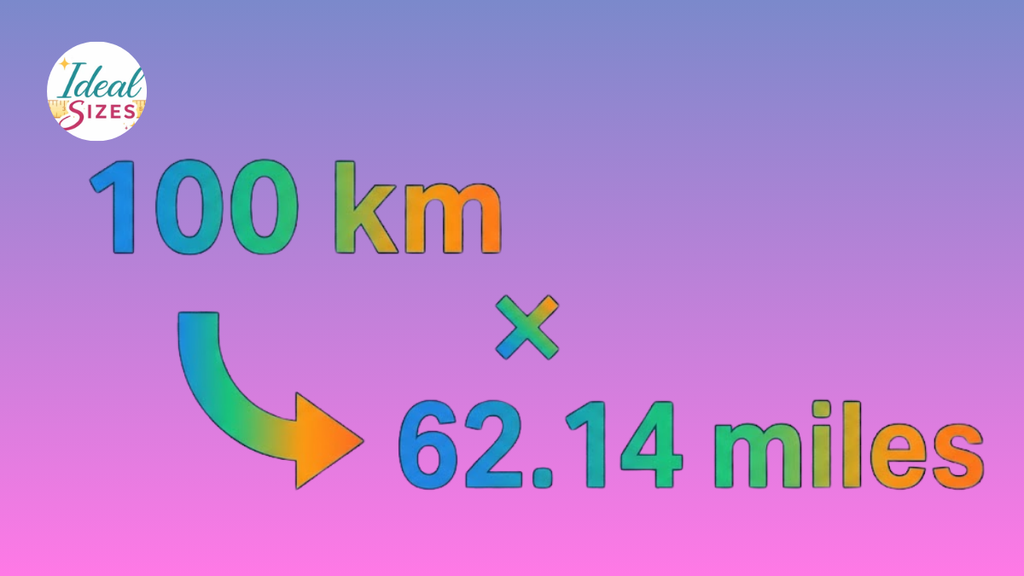
100 kilometers translates to roughly 62.14 miles. Whether you’re planning a road trip or just curious about distances, this conversion can help you grasp the distance in familiar terms.
How to Convert 100 km to Miles
To convert kilometers to miles, use this easy formula: Miles = Kilometers × 0.621371. For 100 kilometers, do the math: 100 × 0.621371 = 62.1371 miles. It’s straightforward and useful for anyone needing quick conversions.
100 km vs. 62 Miles
100 kilometers and 62 miles describe almost the same distance. In fact, 100 kilometers is about 62.14 miles. The main difference is the unit used: kilometers are common in most countries, while miles are mainly used in the United States and a few other places.
100 km to Meters
To convert kilometers to meters, multiply the number of kilometers by 1,000. This is because one kilometer equals 1,000 meters. Understanding these measurements can be useful in various contexts.

How Many Meters Is 100 km?
100 kilometers equals 100,000 meters. It’s a simple conversion, but essential for many activities, like running a marathon or measuring long distances.
How to Convert Kilometers to Meters
To convert kilometers to meters, remember this easy formula: 1 km equals 1,000 meters. So, for 100 kilometers, multiply 100 by 1,000. That gives you 100,000 meters.
100 km to Feet
To convert kilometers to feet, know that 1 kilometer equals roughly 3,280.84 feet. So, for 100 kilometers, the calculation is simple. Just multiply 100 by 3,280.84, which equals about 328,084 feet.
How Many Feet is 100 km?
100 kilometers is roughly 328,084 feet. It’s a handy figure for travelers and adventurers who rely on different units of measurement. Whether you’re hiking a trail or planning a road trip in a new country, this conversion gives you a clearer picture of distance.
100 km in Feet and Inches
100 kilometers equals 328,083 feet and 11.87 inches. This level of detail helps when measuring specific distances, such as in sports or construction. Understanding this conversion can also enhance your appreciation for long distances.
100 km to Yards
Converting 100 kilometers to yards is straightforward. One kilometer equals about 1,093.61 yards. To find how many yards are in 100 kilometers, simply multiply 100 by 1,093.61. This gives you 109,361 yards.
What Does 100 km Look Like?
Imagine driving 100 kilometers on a highway. Depending on the route, 100 kilometers can take you from one city to another or across a large region. If you were to walk this distance, it would take about 20 hours non-stop, almost a full day on your feet. You could also picture 100 km as a long hiking route crossing forests, hills, or several towns.
100 km Compared With a Road Trip
Driving 100 kilometers is a meaningful distance for intercity travel. It’s long enough to get you out of your usual surroundings. In many countries, this distance connects significant hubs, making it vital for commuters and weekend adventurers.
100 km Compared With a Marathon
A standard marathon stretches 42.195 kilometers, which means 100 kilometers is roughly equivalent to running about 2.37 marathons.
100 km Compared With a 10K Run
A 10K run covers 10 kilometers, so 100 kilometers is 10 times the distance of a 10K. While a 10K is a common running challenge, covering 100 kilometers requires much more distance and endurance.
100 km Compared With a 5K Run
A 5K run covers 5 kilometers, so 100 kilometers is equal to twenty 5K runs. That makes 100 km much easier to visualize: imagine completing the same 5K distance twenty times. A 5K is a common running distance, while 100 km is an ultramarathon distance that requires much more endurance.
How Long Does It Take to Travel 100 km?
To determine how long it takes to travel 100 kilometers, you can use the formula: Time = Distance ÷ Speed. For example, if you drive at an average speed of 100 km/h, it will take about 1 hour to cover that distance. Actual travel time can vary based on many factors such as traffic congestion, road conditions, and terrain.

| Speed | Approximate Time for 100 Kilometers |
| 5 km/h | 20 hours |
| 10 km/h | 10 hours |
| 20 km/h | 5 hours |
| 40 km/h | 2.5 hours |
| 50 km/h | 2 hours |
| 60 km/h | 1 hour 40 min |
| 80 km/h | 1 hour 15 min |
| 100 km/h | 1 hour |
| 120 km/h | 50 minutes |
How Long Does It Take to Walk 100 km?
Walking 100 kilometers at a steady pace of 5 km/h will take about 20 hours of continuous walking. This might seem daunting, but it’s important to break it down. For many walkers, splitting the journey into manageable segments can make it feel less overwhelming.
For instance, if you walk for 10 hours a day, you could complete the distance in two days. However, factors like terrain, weather, and your fitness level can affect your time.
Can You Walk 100 km in One Day?
Walking 100 kilometers in a single day is a challenging feat that requires careful planning. At a pace of 5 km/h, you would need about 20 hours of continuous walking, which is nearly impossible for most people without breaks.
How Long Does It Take to Cycle 100 km?
Cycling 100 kilometers can take from 3 to 7 hours, depending on several key factors. Your cycling speed plays a major role; an average cyclist might cruise at around 20 km/h, while seasoned riders can hit 30 km/h or more. Hilly routes will also slow you down, while flat paths can help you maintain a faster pace. Wind and weather conditions also affect your ride.
| Cycling Speed | Moving Time |
| 15 km/h | 6 hr 40 min |
| 20 km/h | 5 hr |
| 25 km/h | 4 hr |
| 30 km/h | 3 hr 20 min |
Is 100 km a Long Distance?
Whether 100 kilometers is considered a long distance often depends on the context. For a casual walker, it might seem daunting. Walking 100 kilometers would take several days and require a lot of stamina and preparation. However, for professional athletes or seasoned hikers, this distance may feel more manageable.
For Driving
A 100 kilometers drive is typically manageable for most people. It usually takes about an hour or so on the highway. It is a convenient distance for day trips.
For Cycling
Cycling 100 kilometers is no small feat. It requires stamina and training, and it usually takes several hours, depending on your pace. Whether you’re a casual rider or training for an event, it demands a fair amount of endurance and mental focus.
For Running
A 100-kilometer ultramarathon is an extreme endurance test. It far exceeds the standard marathon distance and pushes you to your physical and mental limits. Runners must train extensively and develop strategies for nutrition and pacing.
100 km in Different Contexts
- 100 km Road Trip: A hundred km road trip is a fantastic way to unwind. You can explore charming towns, scenic viewpoints, and local eateries within a few hours. This distance is perfect for a day adventure.
- 100 km Hiking: For hikers, a hundred-kilometer trek can be a rewarding experience. It encourages exploration of diverse ecosystems and breathtaking landscapes. This distance often demands meticulous planning for food, gear, and safety.
- 100 km on a Map: On a map, 100 kilometers represents a significant distance, typically covering a large part of a region. This scale allows travelers to visualize their journey and plan routes effectively. It can help assess travel times, whether by car, bike, or foot.
- 100 km Travel Distance: As a travel distance, 100 kilometers is versatile. It can signify a quick getaway, a weekend trip, or a competitive event for athletes.
100 Kilometers vs. Common Distances
| Distance | Relationship to 100 kilometers |
| 1 km | 1/100 |
| 5 km | 1/20 |
| 10 km | 1/10 |
| 20 km | 1/5 |
| 25 km | 1/4 |
| 42.195 km | 100 kilometers is ~2.37× |
| 50 km | 100 kilometers is 2× |
| 100 kilometers | 1× |
| 200 km | 2× |
100 km in Miles, Meters, Feet and Yards at a Glance
| 100 kilometers in miles | 62.14 miles |
| 100 km to meters | 100,000 meters |
| 100 km to feet | 328,084 feet |
| 100 km to yards | 109,361 yards |
Conclusion
100 kilometers is a significant distance that can mean different things depending on how you travel. For drivers, it often feels like a short road trip, while for cyclists, it presents a challenging ride. Walking 100 kilometers can take a lot of time and effort, often spanning several days. For runners, this distance is quite ambitious and requires serious training. Understanding 100 kilometers in miles, meters, or feet can help you appreciate its magnitude.
FAQs
How Many Miles is 100 km?
100 kilometers is equal to about 62.14 miles. This conversion is useful when you travel or want to understand distances in different countries.
What is 100 km/h in mph?
To convert 100 kilometers per hour (km/h) to miles per hour (mph), use a simple formula. One kilometer is approximately 0.621371 miles. So, multiplying 100 by 0.621371 is about 62.14 mph. Therefore, 100 km/h is roughly 62 mph.
How Many Marathons is 100 km?
A marathon is 42.195 kilometers long. To find out how many marathons fit into 100 kilometers, divide 100 by 42.195. This is about 2.37 marathons.
How Long Does it take to drive 100 km?
Driving 100 kilometers usually takes about one hour if you maintain a speed of 100 km/h. However, this can change based on traffic conditions, road type, and weather. In heavy traffic or bad weather, it might take longer.
What is 100 km in Miles?
100 kilometers is about 62.14 miles. To convert kilometers to miles, use a simple formula: multiply the number of kilometers by 0.621371. So, for 100 kilometers, 100 x 0.621371, which gives 62.14 miles.