
3 Car Garage Dimensions: Complete Size Guide, Layouts, Chart & Planning Tips
A three-car garage provides space for parking vehicles, storage, and workspace. It adds significant value to your home. The beauty of a well-planned 3-car garage is that it fits your cars and also provides extra storage and workspace. A poorly planned garage can waste both space and money, while the right three-car garage size can make a huge difference in your home’s functionality.
In this guide, “3 Car Garage Dimensions: Complete Size Guide, Layouts, Chart & Planning Tips,” we will explore everything you need to know about designing a spacious and practical garage. You’ll learn not just about measurements but also about smart layouts that maximize your garage’s potential. With the right information, you can design a garage that meets all your storage and parking needs.
Standard Dimensions of a Three-Car Garage
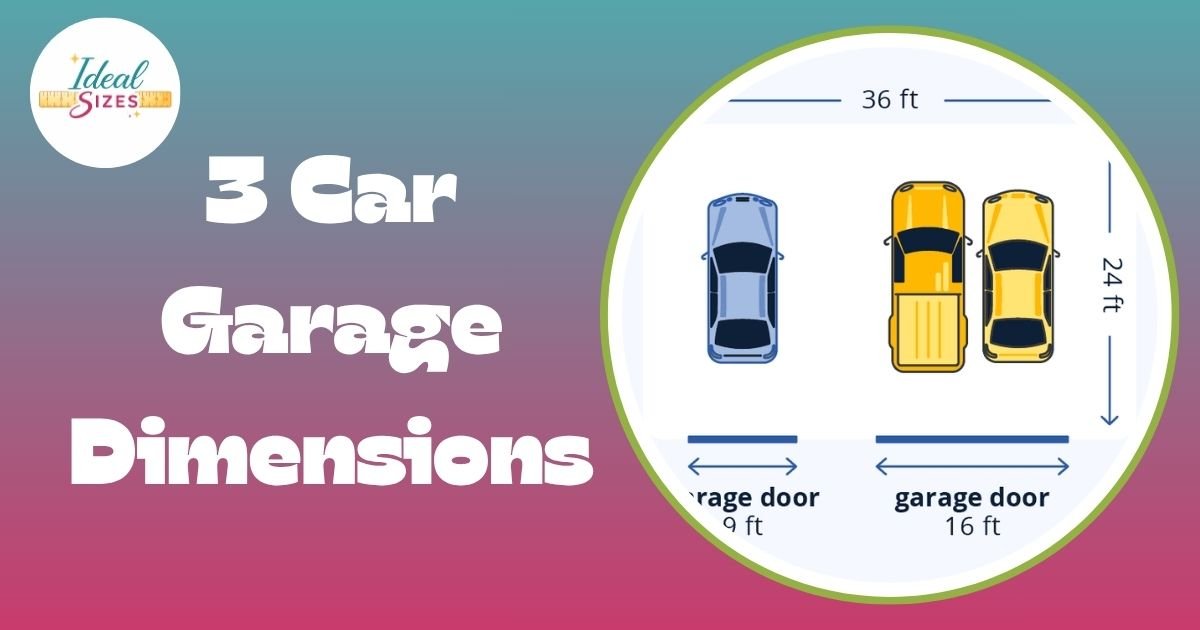
The size of the 3-car garage allows plenty of room to park three vehicles comfortably. It measures between 660 and 1,200 square feet. Each car needs about 10 to 12 feet in width. A clearance of 3to 5 feet around each vehicle is recommended. This extra space is useful for tools, bikes, or seasonal items. For a smooth driving experience, a minimum depth of 24feet is ideal. This helps with turning and parking without any tight squeezes.
| Garage Type | 3 Car Garage Width | 3 Car Garage Depth | 3 Car Garage Door Width | 3 Car Garage Door Height | 3 Car Garage Typical Ceiling Height |
| Compact 3-Car Garage | 30–32 ft | 20–22 ft | 8–9 ft each | 7–8 ft | 8–10 ft |
| Standard 3-Car Garage | 34–36 ft | 22–24 ft | 9 ft each | 7–8 ft | 9–10 ft |
| Large 3-Car Garage | 38–40 ft | 24–30 ft | 9–10 ft each | 8 ft | 10–12 ft |
| Tandem 3-Car Garage | 20–24 ft | 36–40 ft | 16–18 ft main door | 7–8 ft | 9–10 ft |
Minimum 3 Car Garage Dimensions
| Minimum 3 Car Garage Measurement Type | Minimum Three Car Garage Dimensions |
| Minimum Garage Width | 30 ft |
| Minimum Garage Depth | 20 ft |
| Minimum Ceiling Height | 8 ft |
| Minimum Single Door Width | 8 ft |
| Minimum Double Door Width | 16 ft |
| Minimum Garage Door Height | 7 ft |
| Minimum Space Per Vehicle | 9 × 18 ft |
| Minimum Driveway Width | 20 ft |
| Minimum Turning Clearance | 24 ft depth |
| Minimum Walkway Space | 2 ft |
3-Car Garage Square Footage
When designing a three-car garage, consider 3 car garage sq ft. It typically ranges from 600 to 1,200 square feet. A smaller option, about 600-700 sq ft, can fit three compact cars. Standard sizes, between 750 and 900 sq ft, are perfect for regular vehicles. Large garages of 900 sq ft and up can accommodate trucks and SUVs. The typical width of a three-car garage is 30 to 40 feet, and the depth is 20 to 30 feet. Each vehicle requires about 200 to 300 square feet.
Standard 3 Car Garage Size Chart
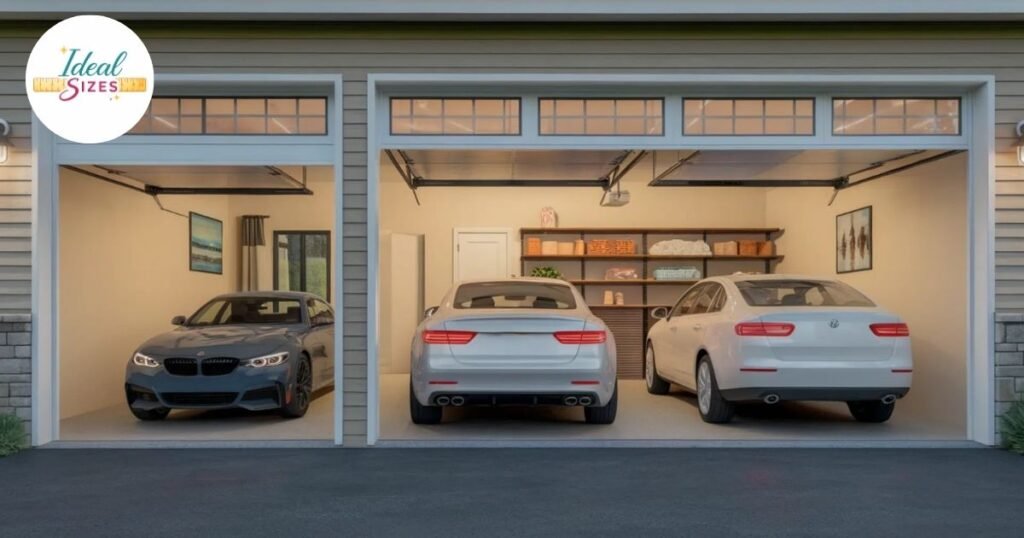
A standard three-car garage comfortably fits three cars along with extra space for walking and storage.
| 3 Car Garage Layout | Overall, the three-car garage size(W × D) | 3 Car Garage Parking Space Per Car | Extra Space | Best For | 3 Car Garage Common Features |
| Basic Layout | 30 × 20 ft | 9–10 ft wide | Minimal | Compact cars | Simple storage, standard doors |
| Family Size Layout | 34 × 24 ft | 10–12 ft wide | Moderate | Sedans & SUVs | Storage shelves, walking space |
| Oversized Layout | 40 × 30 ft | 12+ ft wide | Large | Trucks & large SUVs | Workspace, cabinets, tool area |
| Tandem Layout | 22 × 40 ft | 10–11 ft wide | Long rear space | Narrow lots | One car parked behind another |
| Luxury / RV Style | 42 × 36 ft | 12–14 ft wide | Very large | Multiple large vehicles | High ceilings, workshop area |
| Garage With Storage Loft | 36 × 28 ft | 10–12 ft wide | Upper storage area | Family homes | Attic/loft storage, utility zone |
| Workshop Combination | 40 × 32 ft | 10–12 ft wide | Dedicated work area | Mechanics & DIY use | Tool benches, equipment space |
3 Car Garage Door Sizes
When it comes to garage doors, size matters. There are three main sizes for standard car garage doors: single, double, and oversized.
| Garage Door Sizes for a 3 Car Garage | Standard 3 Car Garage Width | Standard 3 Car Garage Height | Common Configuration | Best For |
| Single Garage Door | 8–10 ft | 7–8 ft | Three separate doors | Compact cars & sedans |
| Double + Single Door | 16–18 ft + 8–10 ft | 7–8 ft | One double door + one single door | Family vehicles |
| Triple Garage Door | 24–32 ft | 7–8 ft | One large full-width door | Modern garage designs |
| Oversized Garage Door | 10–12 ft | 8–10 ft | Large individual bays | Trucks & SUVs |
| RV Garage Door | 12–14 ft | 12–16 ft | Tall oversized opening | RVs & campers |
| Custom Wood Door | 8–20 ft | 7–10 ft | Decorative/custom layouts | Luxury homes |
| Roll-Up Steel Door | 8–18 ft | 7–8 ft | Sectional roll-up style | Residential garages |
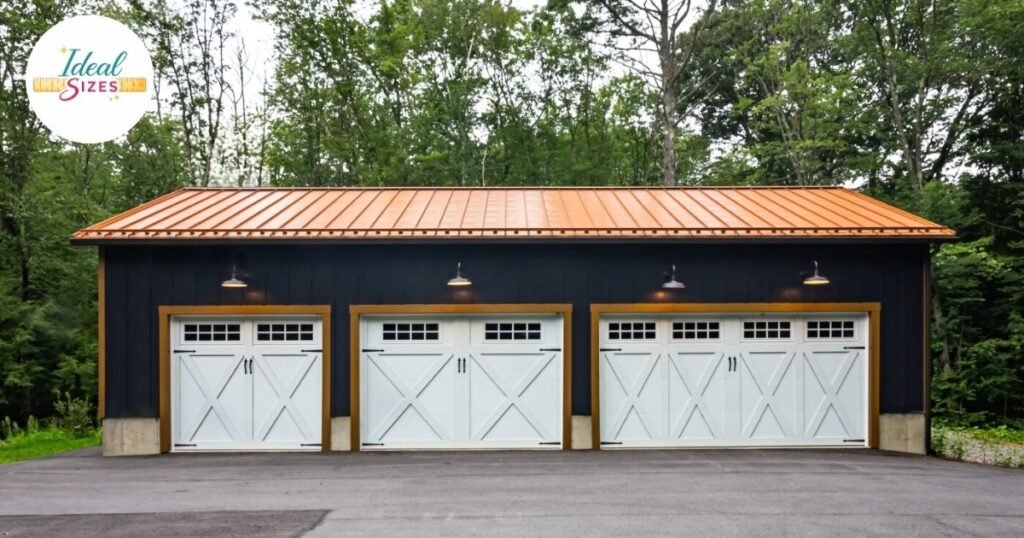
| Carriage Style Door | 8–18 ft | 7–10 ft | Swing or sectional style | Traditional home designs |
Oversized 3 Car Garage Size
An oversized 3-car garage is for extra room. With a width ranging from 38 to 50 feet and a depth of 26 to 40 feet, it can accommodate multiple vehicles, including SUVs, trucks, RVs, boats, and golf carts. The ceiling height typically falls between 10 and 14 feet. For RV, the bay width can be between 12 and 14 feet, with heights from 12 to 16 feet. These garages often include special features like workshops, storage cabinets, or a gym area.
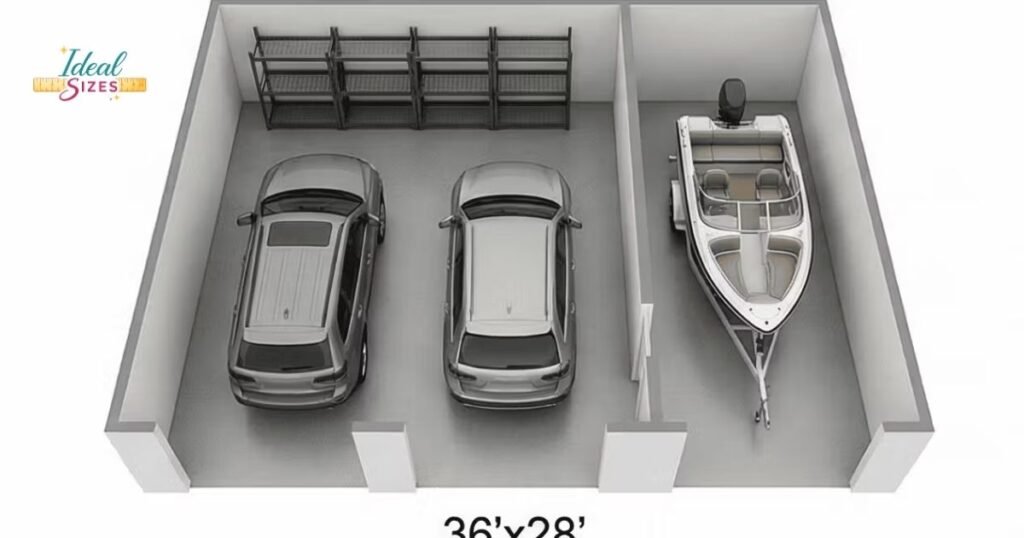
A dedicated workspace can range from 100 to 400 square feet, and additional storage can occupy 50 to 300 square feet. Each vehicle should have a space of 12 to 14 feet wide, and a driveway width of 24 to 30 feet is recommended for easy access.
3-Car Garage Size In Feet
A 3-car garage typically measures between 34 and 36 feet wide and 22 to 24 feet deep. This size is perfect for storing three vehicles. The minimum recommended size is 30 by 20 feet, but a common range is 30 to 40 feet wide and 20 to 30 feet deep. For larger vehicles or extra storage, consider a large size of 38 to 40 feet wide and 24 to 30 feet deep.
3 Car Garage Layouts Types
When choosing a 3-car garage layout, consider how you want to use your space. The Side-by-Side Layout features three bays arranged in a straight row. If you have limited width but more length, the Tandem Layout is ideal.
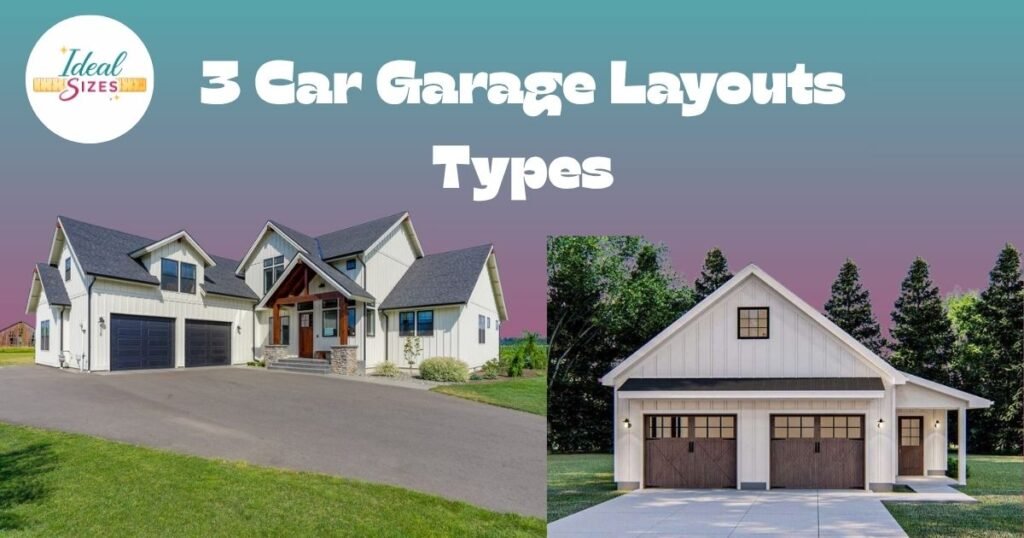
- Side-by-Side Layout: This configuration has three bays lined up in a row. It allows easy access to each vehicle without moving others.
- Tandem Layout: Here, one car is parked behind another. This layout is great for narrow lots. It maximizes space but limits easy access to the rear vehicle.
- Split Bay Layout: This design features two bays side-by-side and a single bay separated. It’s useful for households needing a mix of standard and extra storage space.
- L-Shaped Layout: One bay is positioned perpendicular to the others. This adds variety and can create a unique aesthetic. It’s perfect for corner lots.
- Angle Layout: Parking spaces are angled. This layout is popular in commercial settings but can also be applied to homes.
- Attached Layout: This connects directly to the house. It provides easy access to tools and storage.
- Workshop Layout: This version includes extra space for tools and workbenches. It’s perfect for hobbyists or DIY enthusiasts who need a dedicated area for projects.
3 Car Garage Blueprints
- Side-by-Side Blueprint: Features three equal bays lined up in a row. You can choose between three separate doors for each bay or one large triple door. This design is useful for easy access and organization.
- Tandem Blueprint: Ideal for tight spaces. It has two front bays with an extended rear bay. This allows you to park one car behind another to maximize space on your property.
- Split Bay Blueprint: Combines a two-car section with a single-car bay. The interior connecting door offers convenience and flexibility. It is perfect for families with different vehicle needs.
- L-Shaped Blueprint: It has a main two-car structure with a third bay at a right angle.
- U-Shaped Blueprint: Features a central driveway with garage bays on two or three sides. This model is popular in custom homes.
- Angled Bay Blueprint: Bays are set at a 30–45° angle. This design is useful for easier entry and exit.
- Workshop Combination Blueprint: By combining a garage with a workshop, this blueprint caters to hobbyists. You can easily work on projects without cluttering living spaces.
- RV Combo Blueprint: Specifically designed for RVs, this layout accommodates large vehicles. It often includes extra height and wider doors.
- Front-Entry Blueprint: The most common design, where cars enter directly from the front. It’s user-friendly and allows for easy access.
- Rear-Entry Blueprint: Cars enter from the back, which can help reduce street noise. This layout is perfect for homes on busy roads or in areas with strict zoning laws.
Storage And Space Planning In 3 Car Garage
When planning storage for a 3-car garage, it’s essential to optimize every inch. Start by categorizing your items: keep tools, sports equipment, and holiday decorations separate to avoid clutter.
- Maximize Vertical Space: Use wall-mounted shelves and pegboards to store tools and equipment. This keeps items organized and also frees up floor space for larger items.
- Zoning Areas: Divide your garage into zones, such as a parking space, workshop, and storage area. This helps you know where everything belongs and makes it easier to find what you need.
- Use Clear Containers: Store smaller items in clear, labeled bins. It can save time when searching for seasonal items. They also keep everything visible and organized.
- Consider Smart Solutions: Invest in adjustable shelving units and rolling storage carts. They provide flexibility and can be easily moved around as needs change.
- Optimize Floor Space: Keep heavy items at waist height to avoid strain and use the garage floor for large items like bikes or garden tools.
- Declutter Regularly: Set a monthly reminder to go through your garage.
- Think About Lighting: Proper lighting is essential in a garage. Bright, energy-efficient lights can enhance visibility, especially in larger spaces.
Factors That Affect 3 Car Garage Dimensions
- Homeowner Needs: The purpose of a garage influences its size. Families with multiple cars or those who use garages for storage will need more space than minimalists or single-car users.
- Vehicle Size: Not all cars are created equal. A standard sedan takes up less room than an SUV or truck. Knowing your vehicles’ dimensions helps determine the garage’s width and depth.
- Local Regulations: Building codes vary by location. Some areas have specific guidelines for garage sizes. Always check local requirements before planning.
- Future Expansion: Consider growth. If you plan to buy more vehicles or add equipment, factor that into your design. A little extra space can save you headaches later.
- Additional Features: Planning for shelves, workbenches, or recreational items, include these needs in your calculations. Each feature consumes valuable space, so plan accordingly.
- Climate Considerations: In regions with extreme weather, larger garages may be necessary for comfort and safety. A bigger space can help manage tools and equipment under varying temperatures.
- Budget Constraints: Your budget limits your options. The cost of materials and labor can affect the overall size of your garage.
3 Car Garage Vs 2 Car Vs 4 Car Garage Comparison
| Feature | 2 Car Garage | 3 Car Garage | 4 Car Garage |
| Typical Width | 20–24 ft | 30–40 ft | 40–50+ ft |
| Typical Depth | 20–24 ft | 20–30 ft | 24–40 ft |
| Total Area | 400–600 sq ft | 600–1,200 sq ft | 1,000–2,000+ sq ft |
| Vehicle Capacity | 2 vehicles | 3 vehicles | 4 vehicles |
| Space Per Car | Tight–standard | Standard–comfortable | Very spacious |
| Storage Space | Limited | Moderate | High |
| Extra Features | Basic storage | Storage/workshop option | Workshop, RV space possible |
| Door Setup | Double door | Triple or 2–3 doors | 2 double or 4 single doors |
| Best For | Small families | Average families | Large families/luxury homes |
| Cost Level | Low | Medium | High |
| Driveway Requirement | Shorter width | Moderate width | Wide driveway needed |
3 Car Garage Ideas 2026
- Smart Storage Solutions: Use vertical storage units to maximize space. Shelving and wall-mounted cabinets can hold tools, sports equipment, and seasonal items. Consider adjustable shelves for flexibility as your needs change.
- Multipurpose Design: Transform part of your garage into a workshop or office. By adding a sturdy workbench and good lighting, you can create a productive space. Look for foldable furniture that can open or close depending on your tasks.
- Eco-Friendly Upgrades: Install solar panels on the garage roof to reduce energy costs. Incorporate LED lighting for efficiency and longevity. Using non-toxic paints and sustainable materials can also enhance air quality and reduce your carbon footprint.
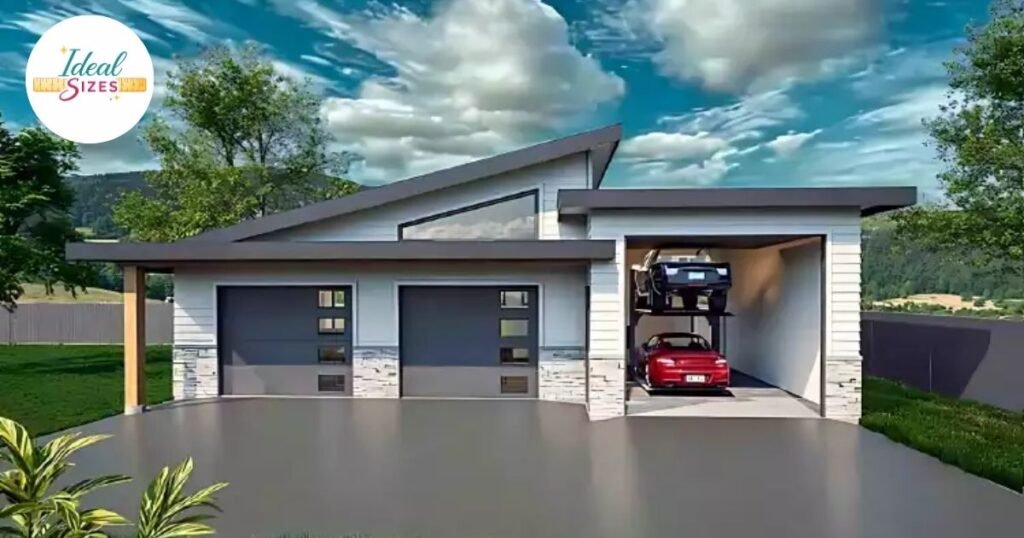
These ideas not only maximize functionality but also modernize your garage for the future. With careful planning, your garage can serve many purposes while remaining organized and eco-friendly.
Pros And Cons Of A 3 Car Garage
Having a three-car garage offers both advantages and disadvantages. On the plus side, it provides ample space for your vehicles. This can be a game-changer for families with multiple cars or for hobbies requiring storage, like boating or cycling. A larger garage can also serve as extra storage for seasonal items, tools, or a workshop.
There are some downsides to consider. A three-car garage often requires more land and can increase the cost of construction. Depending on your neighborhood, it might not boost your home’s value. The extra space can become cluttered if not managed properly, negating the organizational benefits.
Conclusion
Understanding the dimensions of a 3-car garage is essential for proper planning. The space not only needs to accommodate vehicles but also allow for movement and storage. It’s important to consider your specific needs, such as extra room for tools or recreational items. By considering various layouts and measuring your specific needs, you can create a practical and functional garage.
FAQs
What are Three Car Garage Dimensions?
A three-car garage typically measures approximately 30 to 40 feet wide and 20 to 30 feet deep. A common size for many three-car garages is around 34 to 36 feet wide and 22 to 24 feet deep. The total area of a three-car garage usually ranges from about 600 to 1,200 square feet.
What are Three-Car Garage Plans?
Three-car garage plans are architectural designs made for parking three vehicles. These plans show the exact dimensions, including width and depth. They also indicate where the garage doors will be placed. These plans usually include designated zones for storing tools, sports equipment, or seasonal items.
What are Oversized 3 Car Garage Dimensions?
An oversized 3-car garage width typically ranges from 38 to 50 feet. The depth of these garages is approximately between 26 and 40 feet. The ceiling height usually ranges from 10 to 14 feet. Their doors are generally larger, measuring between 10 and 12 feet wide and 8 to 12 feet high.