13mm to Inches: Exact Conversion, Formula, Fraction, Chart & Practical Examples
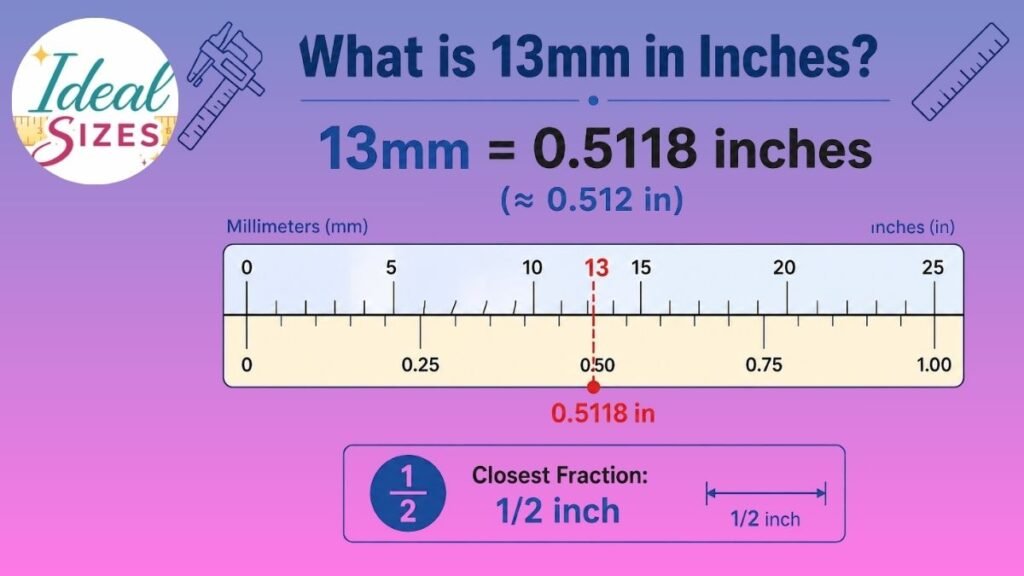
Did you know that many people struggle with converting millimeters to inches? Understanding how to convert measurements like 13mm to inches is essential for anyone involved in crafts, construction, or everyday tasks. 13mm equals exactly 0.5118 inches (approximately 0.512 inches).
This article will cover everything you need to know about 13mm to inches, including the exact conversion, formulas, fractions, and a handy chart, along with practical examples. By the end of this article, you’ll be able to convert millimeters to inches quickly and accurately with confidence.
What is 13mm in Inches?
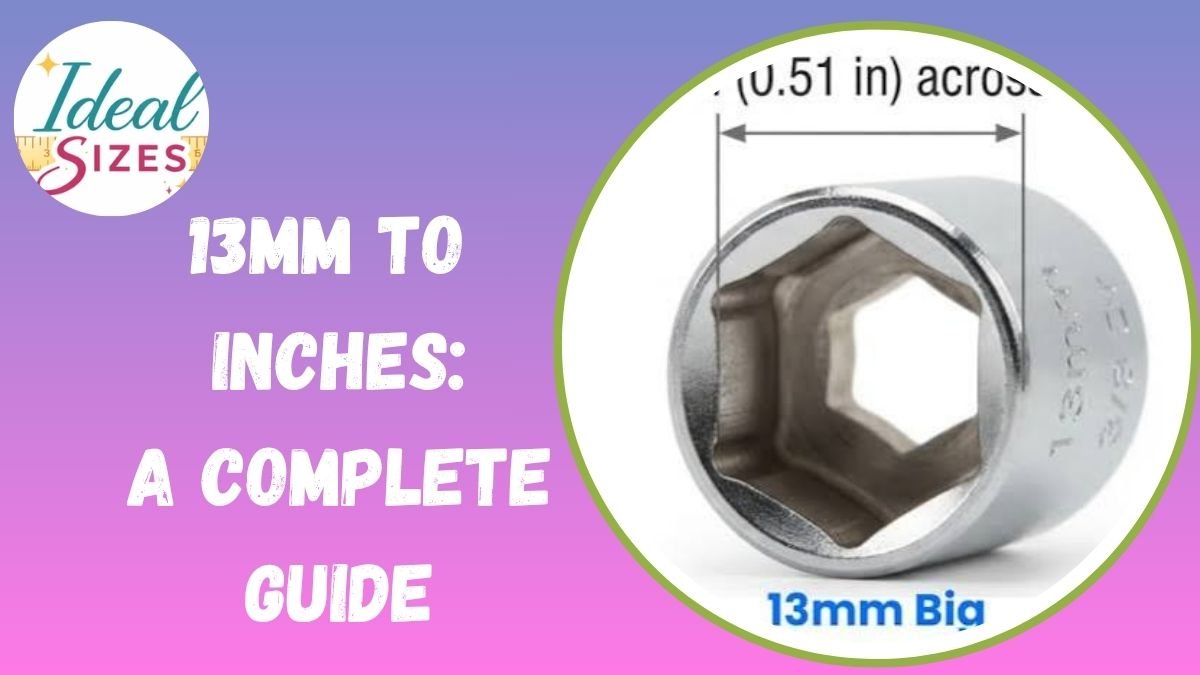
13 mm to inches is 0.511811 inches. For everyday use, this is often rounded to 0.512 inches or 0.51 inches. This conversion is useful in fields such as engineering and automotive repair.
| Measurement | Value |
| Exact | 0.511811 inches |
| Rounded | 0.512 inches |
| Rounded (2 decimals) | 0.51 inches |
| Closest Fraction | 1/2 inch |
| Formula | 13 ÷ 25.4 |
Understanding Millimeters and Inches
Millimeters and inches are units of measurement from two distinct systems: the metric and imperial systems. The metric system, used by most countries, relies on powers of ten. So, one centimeter equals ten millimeters. On the other hand, the imperial system, primarily used in the United States, measures in inches and feet, where 12 inches make a foot.
Formula to Convert 13mm to Inches
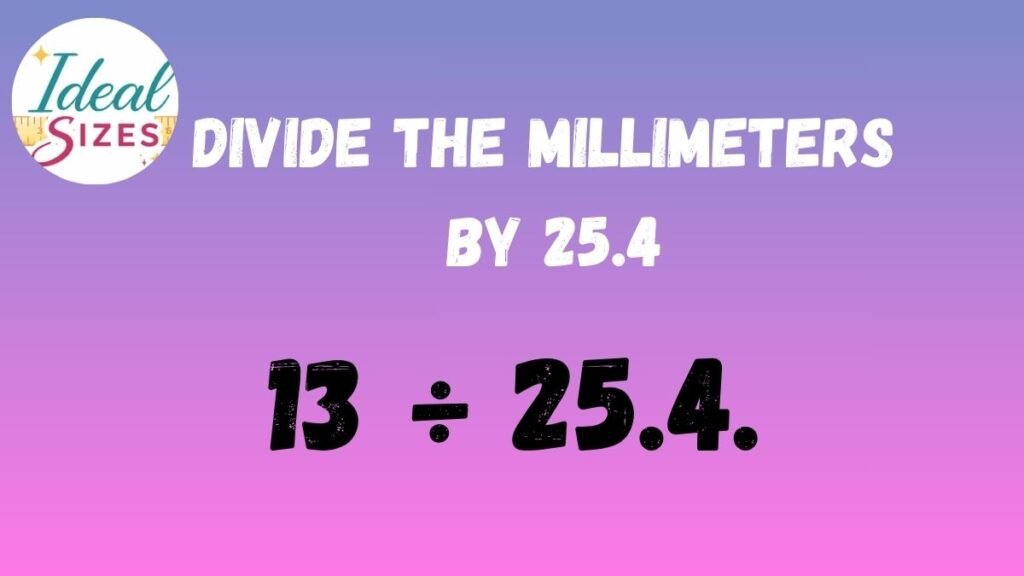
To convert 13mm to inches, you can use a simple formula: divide the millimeters by 25.4. So, the calculation looks like this: 13 ÷ 25.4. This gives you approximately 0.5118 inches. We use 25.4 in this formula because there are exactly 25.4 millimeters in one inch. This number acts as a conversion factor.
If you ever need to go the other way, you can use the reverse formula: multiply the inches by 25.4. For example, if you have 1 inch and want to find out how many millimeters that is, you’d do 1 × 25.4, resulting in 25.4 mm.
How to Convert 13mm to Inches (Step-by-Step)
To convert 13mm to inches, follow these steps:
- Step 1: Write the Formula
To convert millimeters to inches, remember this formula: inches = millimeters ÷ 25.4.
- Step 2: Insert the Value
Now, plug in your value. For 13 mm, it looks like this: 13 ÷ 25.4.
- Step 3: Calculate
Next, do the math. Dividing gives you approximately 0.511811 inches.
- Step 4: Round
Finally, round your answer for simplicity. This brings you to about 0.512 inches.
Final Answer: Therefore, 13 mm is approximately 0.512 inches. This conversion can help you navigate different measurement systems with ease! Whether you’re working on a project or just curious, knowing how to convert measurements enhances your versatility.
13mm in Decimal and Fractional Inches
Decimal inches are frequently used in engineering and technical fields. They provide clear, exact values that help with calculations and designs. On the flip side, fractional inches are often favored in woodworking and construction, where fractions are easier to handle for quick measurements. Though decimal and fractional systems serve different needs, knowing how to navigate them is essential for anyone working with measurements. Here are 13 mm values in decimal and fractional inches.
| Type | Value |
| Exact Decimal | 0.511811 |
| Rounded | 0.512 |
| Rounded (2 decimals) | 0.51 |
| Closest Fraction | 1/2 inch |
13mm to Inches Conversion Chart
If you’re working with measurements, understanding conversions can save you time and confusion. Here is a conversion chart to help you with measurements.
| Millimeters | Inches |
| 8 | 0.315 |
| 9 | 0.354 |
| 10 | 0.394 |
| 11 | 0.433 |
| 12 | 0.472 |
| 13 | 0.512 |
| 14 | 0.551 |
| 15 | 0.591 |
| 16 | 0.630 |
| 18 | 0.709 |
| 20 | 0.787 |
| 25 | 0.984 |
Practical Uses of 13mm Measurements
Thirteen millimeters is a small and common measurement that is found everywhere in our surroundings. Here are some practical uses of 13 mm measurements.
Automotive Repair
In automotive repair, 13mm sockets are essential for working with hex bolts. They allow for easy tightening and loosening, which makes regular vehicle maintenance smoother. If you’re dealing with engine components or suspension parts, you’ll often find 13mm bolts.
Construction
In construction, 13mm measurements play a vital role in securing steel brackets and frame connections. They are also commonly used for concrete anchor bolts and various fastening hardware. This size is essential for structural metal fabrication and installations.
Plumbing
In plumbing, 13mm connections often appear in compression nuts on water supply lines. They’re also used in pipe fittings and plumbing connectors. Valve and faucet installation hardware frequently uses this measurement.
Machinery
In machinery, 13mm measurements are essential for machine assembly and maintenance. This size is ideal for mounting bolts used in industrial equipment. Precision mechanical components often use 13mm measurements to fit snugly.
Electronics
In the electronics field, 13mm dimensions help with mounting holes and hardware spacing. This consistency allows components to fit perfectly within enclosures.
DIY Projects
For DIY enthusiasts, 13mm measurements are common in furniture assembly hardware. Many home repairs and renovation tasks rely on this size for brackets and supports.
Jewelry and Crafts
In jewelry making, a 13mm measurement can define the charm and beauty of a bead or pendant. For instance, using 13mm beads can create visually appealing bracelets and necklaces. It’s also a standard size for ring bands.
Engineering
In engineering, 13mm measurements play a vital role in design specifications. They’re often used in CAD drawings. A 13mm specification is common in CNC machining, where exact measurements are vital for high-quality results.
Everyday Things That Are About 13mm
Many everyday objects share a common size of about 13mm. Here are some of the most common everyday things that are about 13 mm in size.
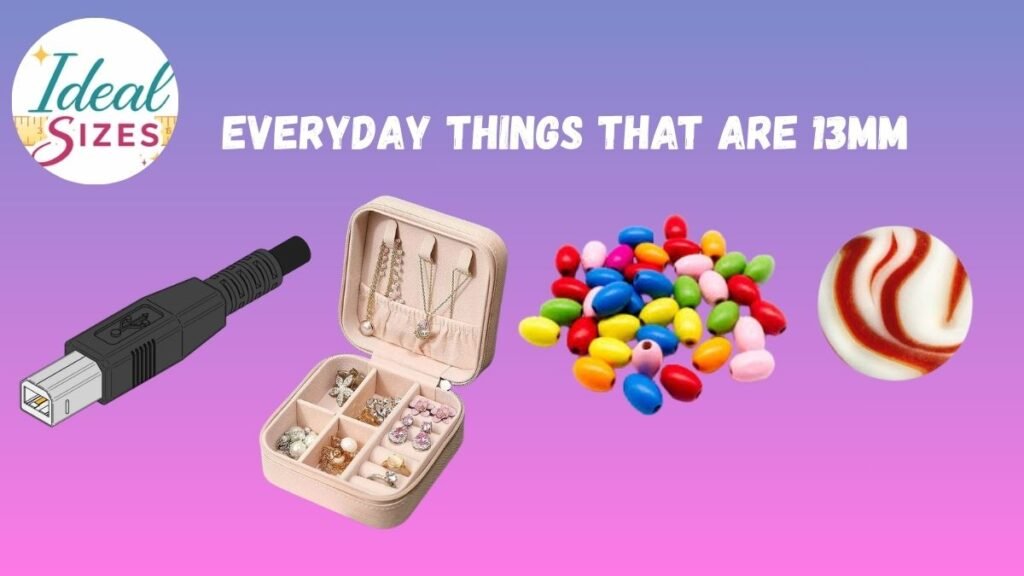
The Width of a Shirt Button
The buttons on a dress shirt are usually about 13mm wide. This size is perfect for balance and function. They allow the shirt to close comfortably without being too bulky.
Diameter of a Small Marble
A tiny marble, often found in children’s games, is approximately 13mm in diameter. This size is easy to handle and play with. Marbles spark creativity and have been enjoyed for centuries. They come in various colors and patterns.
Diameter of a Medium Craft Bead
A medium craft bead is often around 13mm in diameter. This size is versatile for jewelry-making and other artistic projects. Its dimensions make it easy to string and pair with other beads.
A Stack of Coins
When you stack 8 to 10 U.S. coins, you get approximately 13mm in thickness. It’s a small measurement, but it plays a role in everyday finance. This height is enough to fit neatly in your wallet or pocket without taking up too much space.
USB Connectors
The USB Type-A connector, commonly used for charging and data transfer, is also about 13mm wide at the metal plug section. This width allows countless devices to connect seamlessly. From your phone charger to computer peripherals, this size has simplified technology for a broad audience.
Small Accessories
Some small finger rings have a diameter close to 13mm. This size is often chosen for delicate designs. The width of a marker pen cap near the opening is similarly sized. Specific small camera lens filter rings, often used in photography, also hover around this 13mm mark.
13mm Compared with Common Inch Fractions
When comparing 13mm to common inch fractions, it’s helpful to know that 1 inch equals 25.4mm. So, 13mm is roughly 0.51 inches.
| Fraction | Decimal | Compared to 13mm |
| 1/2 | 0.500 | Very close |
| 17/32 | 0.531 | Slightly larger |
| 9/16 | 0.563 | Larger |
| 5/8 | 0.625 | Much larger |
Common Mistakes When Converting mm to Inches
Many people make the following mistakes when they convert mm to inches.
Using 2.54 instead of 25.4: Many people mistakenly use 2.54 as the conversion factor. This number only applies when converting inches to centimeters, not millimeters to inches. The correct factor is 25.4 mm per inch.
Multiplying instead of dividing: One common error is to multiply millimeters by 25.4 when converting to inches. Instead, you should divide by 25.4 to get the correct inch value. This simple switch can change the whole outcome.
Mixing mm with cm: Sometimes, individuals confuse millimeters with centimeters. Remember that 1 cm equals 10 mm. Mixing these units can lead to miscalculations.
Rounding too early: Rounding your numbers before finishing the conversion might create inaccuracies. It’s better to keep full decimal values until the end for the best precision.
Wrong decimal place: A slip in the decimal place can lead to a huge error. Check your numbers carefully to ensure they’re in the correct position.
Guessing fractions: Estimating or guessing fractions can also lead to incorrect conversions. Always use precise values or reliable calculators.
Ignoring exact values: Don’t overlook the importance of exact values. Small differences can matter and lead to significant real-world implications.
Why Accurate Conversions Matter
Accurate conversions from millimeters to inches are essential across various fields. Here’s why they matter:
- Manufacturing: Precision is essential. Even a slight error in measurements can lead to defective products. Accurate conversions reduce waste and rework.
- Automotive Repair: Mechanics often deal with both metric and imperial sizes. Correct conversions mean the right tools and parts are used. This saves time and avoids costly mistakes.
- Engineering: Engineers rely on exact measurements for design and calculations. Miscalculations can compromise safety and functionality.
- Woodworking: Carpenters frequently transition between measurement systems. Accurate conversions help create precise cuts and joints.
- Construction: Builders work with plans that may use different measurement units. Clear conversions prevent errors that could delay projects or exceed budgets.
- CNC Machining: In CNC machining, exact conversions maintain the integrity of designs.
Related Metric to Inch Conversions
- 8mm to Inches: 8mm converts to approximately 0.31 inches. It’s a common size in jewelry and craft projects.
- 10mm to Inches: 10mm is around 0.39 inches, often used for buttons and beads.
- 12mm to Inches: 12mm is about 0.47 inches. This size is handy for small hardware items like screws and bolts.
- 14mm to Inches: 14mm translates to approximately 0.55 inches. It frequently pops up in woodworking and furniture design.
- 15mm to Inches: 15mm equals about 0.59 inches. This measurement is useful in plumbing and piping.
- 16mm to Inches: 16mm measures around 0.63 inches and is common in film and photography.
- 20mm to Inches: A 20mm measurement is about 0.79 inches. This size is ideal for larger beads or nuts in mechanical projects.
- 25mm to Inches: 25mm is equal to 0.98 inches, often rounding to about an inch. Understanding these metric to inch conversions can simplify various DIY projects, whether you’re crafting or making repairs. By knowing these sizes, you can choose the right materials and tools with confidence.
Conclusion
Knowing how to convert 13mm to inches is important for many daily activities. In this article, we explored the exact conversion of 13mm to inches, breaking it down into simple formulas and practical examples. Understanding this conversion is essential, especially for tasks involving measurements in various fields like construction or crafting. We also provided a helpful chart to make quick conversions easy for you. Remember, 1 millimeter is approximately 0.03937 inches, so 13mm converts to about 0.5118 inches. Now that you’re equipped with this knowledge, don’t hesitate to apply it in your next project!
FAQs
What is 13mm in Inches Exactly?
There are 25.4 millimeters in one inch, so 13 mm is 0.511811 inches. For most everyday uses, you can round this number to three decimal places. So, 13 mm is approximately 0.512 inches.
Is 13 mm equal to 1/2 inch?
No, 13mm is not equal to 1/2 inch. In fact, 1/2 inch is exactly 12.7mm. This means that 13mm is slightly larger than 1/2 inch. To be precise, 13mm is about 0.3mm more than 12.7mm.
How do you convert 13 mm to Inches?
To convert 13 mm to inches, you can use a simple formula: Inches = Millimeters ÷ 25.4. So take the number of millimeters and divide it by 25.4. For 13 mm, you do the math like this: 13 ÷ 25.4. When you calculate that, you get about 0.511811 inches. If you round it, it is approximately 0.512 inches.
What is 13mm in centimeters?
To convert millimeters to centimeters, use a simple formula. For every 10 millimeters, there is 1 centimeter. So, to find out how many centimeters are in 13 millimeters, you divide 13 by 10. So, 13 millimeters equals 1.3 centimeters.
How many inches is 13mm rounded?
One inch equals 25.4 mm. When you divide 13 mm by 25.4, you get about 0.5118 inches.
If you round that number, it becomes 0.512 inches when rounded to three decimal places. If rounding to two decimal places, it is 0.51 inches. A close fraction for this measurement is 1/2 inch.
What size wrench fits a 13mm bolt?
A 13mm bolt requires a 13mm wrench or socket to fit its head properly. This size is common in various applications, especially in automotive repairs. You’ll often find 13mm bolts in engines, suspensions, and other vehicle parts.